Upgrading to dual beam HID headlights dramatically improves brightness. However, you must wire them correctly to avoid flickering, shutdowns, or melted switches.
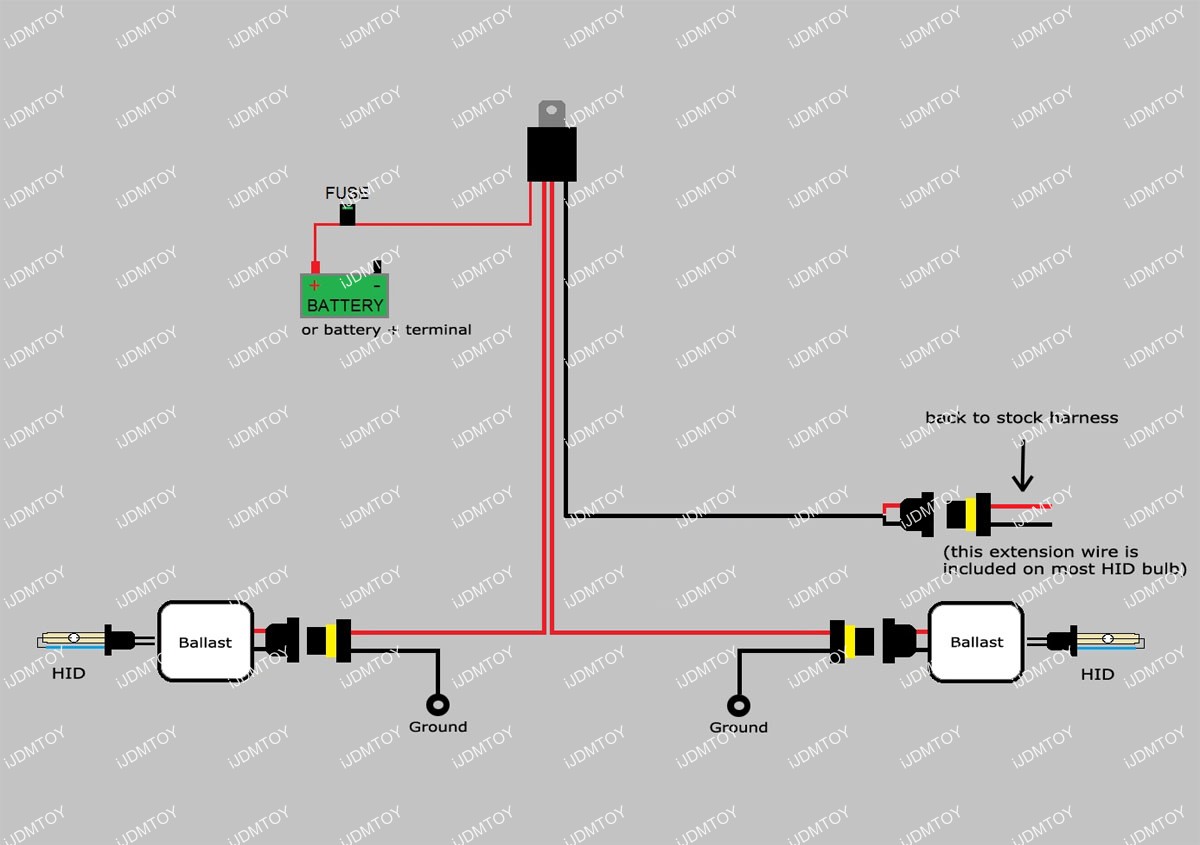
A dual beam relay harness solves those problems. It pulls power directly from the battery while using your factory headlight signal as a trigger.
Let’s walk through the process step by step.
What Is a Dual Beam Relay Harness?
A dual beam relay harness controls both low and high beam functions in one system.
Instead of drawing power through the factory wiring, the harness:
-
Connects directly to the battery
-
Uses a fused power lead
-
Activates through a factory headlight signal
-
Controls both ballasts and the high-beam solenoid
Because of this design, your HID system receives stable voltage. As a result, you avoid flicker and inconsistent output.
When Do You Need One?
You should use a dual beam relay harness if:
-
Your vehicle uses 9004, 9007, or H4 bulbs
-
Your headlights flicker after HID installation
-
The lights shut off randomly
-
You experience “bulb out” warnings
Additionally, vehicles with CANBUS or PWM systems benefit from relay harness protection.
Components of the Harness
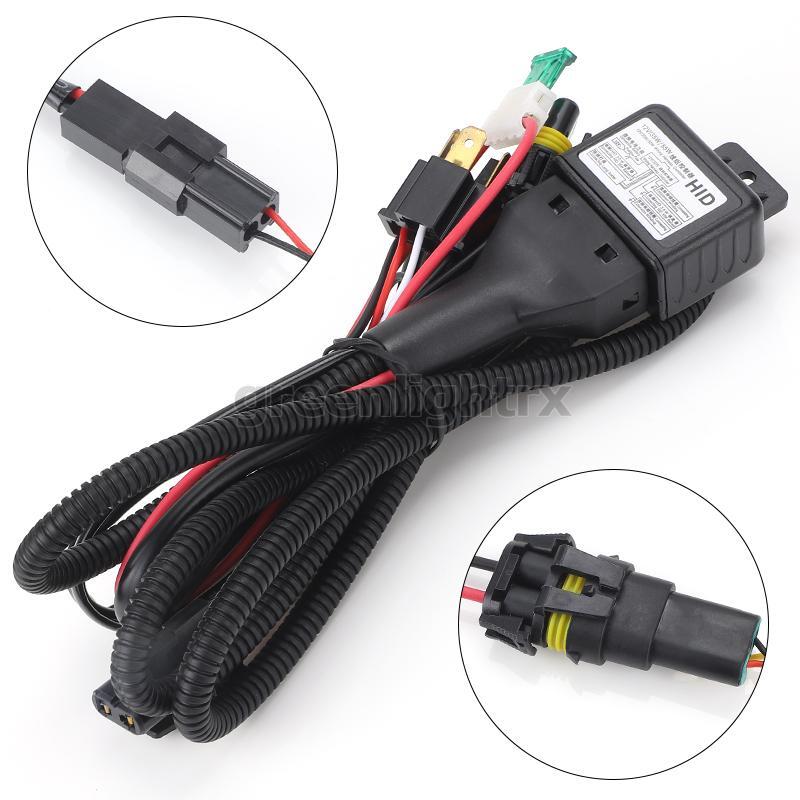
A typical dual beam harness includes:
-
Two ballast output connectors
-
One battery positive lead (with fuse)
-
One ground wire
-
Two high-beam solenoid connectors
-
One factory trigger input
-
Two relays
Understanding each connection prevents mistakes during installation.
Step-By-Step Installation
Step 1: Disconnect the Battery
First, disconnect the negative battery terminal. This protects both you and the vehicle electronics.
Step 2: Mount the Ballasts
Next, mount both HID ballasts securely. Choose a dry location away from engine heat.
Use bolts or heavy-duty brackets. Avoid zip ties alone.
Step 3: Connect the Harness to the Battery
Now connect the fused positive lead directly to the battery. Then attach the ground wire to a clean chassis ground.
Because the harness draws full power from the battery, this step ensures stable voltage.
Step 4: Connect the Factory Trigger
Locate one factory headlight connector. Plug it into the relay harness input.
This connection does not power the lights. Instead, it signals the relays when to activate.
Therefore, your factory switch now controls the relay rather than the ballasts directly.
Step 5: Connect Ballasts and Bulbs
Next, plug each ballast into the harness outputs. Then connect the ballast outputs to the HID bulbs.
Make sure you match polarity correctly. If a bulb does not ignite, reverse the connector.
Step 6: Connect High Beam Solenoids
Dual beam (bi-xenon) bulbs include a moving shield or solenoid for high beam.
Plug the solenoid connectors into the harness leads labeled for high beam.
When you activate high beam, the relay triggers both the ballast and the solenoid mechanism.
Step 7: Test the System
Reconnect the battery. Then test:
-
Low beam function
-
High beam function
-
High beam flash
Because the harness isolates the load from factory wiring, the system should operate smoothly.
Why This Setup Works Better
Factory headlight wiring often struggles to supply consistent voltage. HID ballasts require stable startup current. If voltage drops during ignition, flickering occurs.
The relay harness eliminates that weakness.
Instead of routing full current through thin OEM wires, it delivers power directly from the battery. Consequently, startup becomes reliable and consistent.
Final Tips for a Clean Install
-
Secure all wiring away from moving parts
-
Use dielectric grease on connectors
-
Keep wires away from exhaust components
-
Double-check grounds
Additionally, mount relays upright to reduce moisture intrusion.
Final Thoughts
A dual beam relay harness simplifies HID installation. More importantly, it protects your vehicle’s wiring while delivering full ballast power.
If you install dual beam HIDs without a relay harness, you risk voltage instability. However, when you wire it properly, you gain consistent output and reliable high-beam operation.
Take your time, wire it cleanly, and enjoy the upgrade.