

For this example, we’re working on a 2002 Ford F250. These early 2000s Ford truck headlights are extremely common. Unfortunately, the factory housings do not produce impressive light output, no matter which bulb you use.
Still, if you want to upgrade to LED without doing a projector retrofit, this guide will walk you through it step by step.
Understanding the Factory 9007 / 9004 Setup
The original halogen bulb uses a plastic mounting retainer. That retainer sits over the bulb base and locks it into the housing.
On this F250, the retainer is tall. Other vehicles may use a shorter version. Either way, they function the same.
Once you remove the retainer, the halogen bulb lifts straight out. Inside the housing, you’ll find three alignment tabs. These tabs ensure the bulb seats in only one direction.
When installed correctly, the bulb sits flat with no gaps.
Comparing the Halogen and LED Bulb
The GTR Lighting GEN 2 9007 LED bulb is slightly longer than the factory halogen bulb. However, length does not cause issues in this housing because nothing interferes inside the reflector.
More importantly, the LED bulb uses the same style mounting collar. That means it indexes into the housing exactly like the halogen bulb.
The difference comes from the heat sink and cooling fan. Because of that added hardware, the factory retainer will not fit over the LED bulb as-is.
So, you must modify the installation method slightly.
Step 1: Remove the LED Mounting Collar
First, twist the mounting collar off the LED bulb. It separates easily from the heat sink and fan assembly.
Once removed, you can work with the collar independently.
Step 2: Install the Factory Retainer
Next, position the original factory mounting adapter between the LED heat sink and the removable collar.
In other words, you “sandwich” the factory adapter between the back of the collar and the heat sink assembly.
This step allows you to reuse the original mounting hardware while still securing the LED bulb properly.
Step 3: Reassemble the Bulb

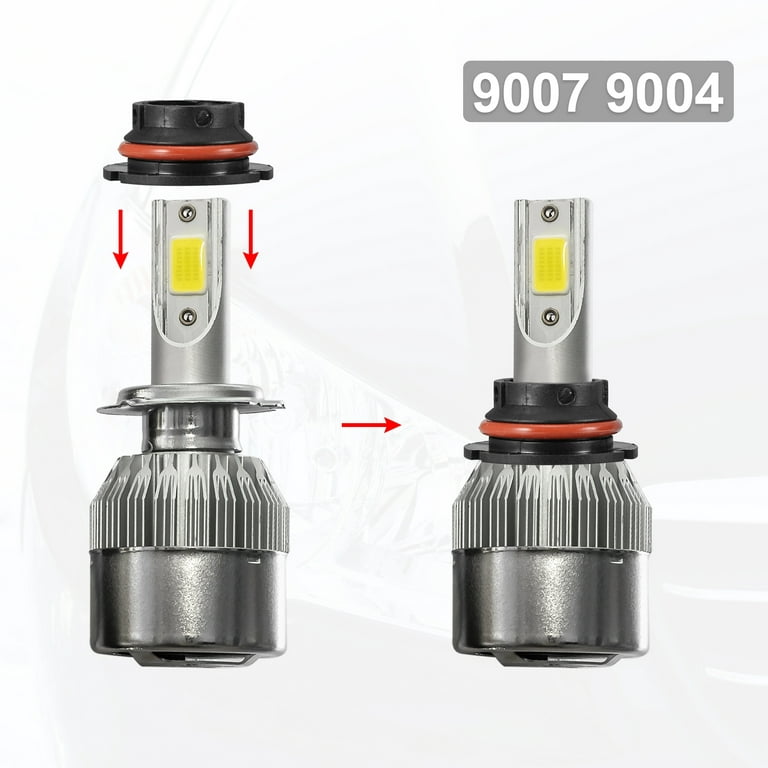

After positioning the factory adapter, reattach the LED mounting collar. Tighten it securely so the adapter stays clamped in place.
Now the LED bulb assembly mirrors the factory setup.
At this point, align the housing tabs with the collar tabs. Because several alignment posts exist, you must line everything up carefully.
Take your time. When positioned correctly, the bulb seats flat with no movement.
Final Installation Notes
Before finishing, keep these important points in mind:
-
If you use a tall factory mounting adapter, consider trimming excess material.
-
Alternatively, drill ventilation holes to improve airflow.
-
The LED cooling fan needs proper airflow to prevent overheating.
Also, double-check alignment before locking everything down. The housing includes alignment posts. The LED collar includes its own tabs. Meanwhile, the factory adapter adds another layer of indexing points.
Everything must line up precisely.
Is This Method Universal?
This guide focuses on early 2000s Ford trucks that use 9007 or 9004 bulbs. However, the overall concept applies to many vehicles using similar bulb types.
If your factory retainer prevents direct LED installation, simply remove the LED collar and sandwich the factory adapter between the collar and heat sink.
Once assembled correctly, the LED bulb installs just like the original.
Upgrading to LED won’t magically fix poor reflector design. However, it can improve color, efficiency, and overall clarity when installed properly.
If you’re into high-performance lighting upgrades, make sure to follow our Facebook page for the latest installs, comparisons, and product releases. For in-depth guides, expert insights, and real-world testing, check out the Better Automotive Lighting Blog— your go-to source for serious illumination upgrades. Up Next: Understanding Headlight FlashingMeet the people behind Better Automotive Lighting

John Tobias, Headlight Junkie and Industry Veteran
Before managing pricing and product categories for the DLG brands, John worked directly with customers in customer service and tech support, then spent several years in marketing creating content like this and the videos published online. Today he takes more than ten years of aftermarket automotive lighting experience to events all over the USA, meeting customers and talking to real people about what they care about. He is focused on understanding the market, the trends, the big players, and what matters to lighting enthusiasts. John has tested thousands of lights, works directly with lighting engineers to evaluate the technical performance behind every recommendation, and is one of the foremost experts on everything happening in the world of aftermarket automotive lighting. LinkedIn


